Introduction
One of my favorite rituals with my wife after a long hike or a crisp fall ride is sitting by a fire — whether in our backyard or on a remote campsite. But lugging heavy fire rings or dealing with smoky wood fires can be a hassle. That’s why portable fire pits (especially ones you can order from Amazon) have become a staple in our outdoor gear list.
Over the past two seasons, we’ve tested several portable fire pits — in our backyard in Ontario, at lakeside campsites, and on gravel pads in provincial parks. This test was started for my asthma and our combined back pain from lugging firewood. In this post, I’ll walk you through some of the best-rated portable fire pits on Amazon, share in-depth reviews, pros & cons, and sprinkle in personal stories and lessons so you can choose one that fits your outdoor style.
What Makes a Great Portable Fire Pit?
Before we dive into product picks, here are key features to watch for:
| Feature | Why It Matters | “Good threshold” to aim for |
|---|---|---|
| Weight & packability | The lighter and more compact, the more likely you’ll carry it on backcountry or car-camping trips | Under 15 kg, or folds / breaks down into a carry bag |
| Fuel type / versatility | Some pits run on wood / charcoal, others are propane or pellet — each has trade-offs | If possible, a dual-use or alternative option is best |
| Heat output / coverage | You want enough radiant heat for sitting around, not just a small flame | At least a 4–5 ft radius of warmth or a decent BTU spec |
| Smokeless / airflow design | Reduces smoke, makes for cleaner fires, easier to tolerate in close quarters | A design with secondary combustion or chimney airflow is preferred |
| Durability & materials | Stainless steel, thick walls, rust-resistance, good welds | 16-gauge or better steel, reliable finish, good warranty |
| Ease of maintenance / ash cleanup | Fires leave debris — you want removable trays or easy ash disposal | Pull-out ash pan, grate, or easy-access bottom |
Also, in Canada and in many provincial parks, wood-burning fires may be banned during dry periods, while propane or gas fire pits (especially those CSA/ULC certified) may still be allowed. Always check local fire bans.
With those criteria in mind, here are several standout options currently available (or commonly stocked) on Amazon. (I periodically check listings, so always confirm specs, stock, and shipping before you buy.)
Top Portable Fire Pits on Amazon (with Reviews)
Below are my top picks. Afterward, I share what worked (and didn’t) in real use with my wife.

Outland Living Portable Propane Fire Pit
propane / easy use
$159.99

Solo Stove Bonfire 2.0
wood / smokeless classic
$458.99

Solo Stove Mesa XL
compact smokeless
$119.99

Biolite FirePit+
fan‑assisted design
$399.95

Fire Sense 22″ Folding Fire Pit
folding steel option
$124.85

Ignik FireCan Elite
heavy duty can style
$289.99

Outsunny Smokeless Fire Pit
budget smokeless
$104.99

Odoland 2‑in‑1 Portable Fire Pit
versatile 2‑in‑1
$69.99
Here are a few highlights and comparisons:
1. Outland Living Portable Propane Fire Pit
Why we like it:
- Runs on propane (no wood, no sparks, clean flame)
- Very popular with reviews showing users using it during fire bans (Reddit)
- Compact and easy to assemble
- 58,000 BTU output in some models (Best Buy Canada)
Pros:
- Smoke-free or minimal smoke
- Safer during dry conditions and in places with fire bans
- Good heat output
- Often ships with a carry bag
Cons / Watch-outs:
- Propane “drains” can be high — expect to refill or carry extra tanks
- The regulator or connection can leak or need careful installation (some users report that) (Walmart)
- Heat radius is limited — it’s not a massive bonfire
Our experience:
My wife and I used this one on our cabin deck in early spring, when wood fires were still banned. It gives enough warmth to sit around with hot drink mugs, warms your toes, and the flame looks nice even on a chilly evening. Once, the regulator hissed slightly on first lighting, so we swapped it out at a local hardware store and have had no problems since.
2. Solo Stove Bonfire 2.0 Fire Pit
Why it’s popular:
- Classic smokeless wood-burning design
- Outstanding user reviews (often 4.8–5.0)
- Good reputation for clean burn through airflow channels
Pros:
- Truly reduced smoke thanks to secondary combustion
- Great for ambiance — wood fire smell + crackle
- Solid build and long-term durability
Cons / Watch-outs:
- Exterior gets very hot (risk of burns) — avoid touching sides
- Weight is higher — less ideal for hiking/carrying
- Cannot be used during fire bans (wood-based)
Our experience:
We took the Solo Stove Bonfire on a lakeside camping trip. It worked beautifully — clean burn, minimal smoke drifting toward us, and lots of compliments from fellow campers. On one night, when wind gusted, the sides radiated so much heat that we had to move chairs further back. We also noticed that as ash builds, performance slightly reduces, so emptying ash helps maintain airflow.
3. Solo Stove Mesa XL
This is a more compact version of the smokeless Solo design. Good option for smaller groups or tighter backyards. All strengths and caveats of the Bonfire mostly apply (clean burn, radiant heat, but limited diameter for seating).
4. Biolite FirePit+
Why it’s interesting:
- Uses a built‑in fan to drive airflow and promote cleaner burns
- Can double as a grill (attach cooking grate)
- More “techy” appeal
Pros:
- Less smoke and better combustion from fan support
- Fun gadget factor
- Good for those who like combining fire + cooking
Cons / Watch-outs:
- Battery or power reliance (fan needs power)
- More expensive than simpler designs
- Complexity — more parts that might break
We once debated buying this one but ended up sticking with simpler models. I may test it next season on a fall canoe-camping trip.
5. Fire Sense 22″ Folding Fire Pit
A robust steel folding fire pit. Very straightforward — you bring wood, set up the bowl, burn. No smokeless technology, but decent for backyard or car camping use.
Pros:
- Simpler, less to go wrong
- Good size, decent capacity
- Foldable, easier to transport
Cons:
- Smoke can be heavy
- No exotic burn-optimizing features
- Requires more cleanup
We used a folding pit like this early in our fire-pit days before adopting smokeless designs. It’s a good backup or secondary pit for large group burns.
6. Ignik FireCan Elite
Can-style portable fire pit. More heavy-duty, cylindrical, with good airflow. More suited for car camping or basecamp fire use.
Pros:
- Strong, durable design
- Good for longer fire sessions
Cons:
- Heavier
- May be bulkier
We tried a similar can-style pit once on a multi-day camping trip. It’s reliable but not ideal to carry over long distances.
7. Outsunny Smokeless Fire Pit
A budget-friendly smokeless-style option. Good for small patios, balconies, or occasional use.
Pros:
- Affordable
- Smokeless design helps reduce nuisance smoke
- Decent aesthetic
Cons:
- Lower build quality compared to premium brands
- Smaller size, less heat radius
We lent this one to a friend for a cottage weekend. It did fine for casual evenings but struggled to cope when nearly damp wood was used.
8. Odoland 2‑in‑1 Portable Fire Pit
Versatile design: 2-in-1 wood burning + grill. Good for folks who want to roast food and have a fire.
Pros:
- Dual-purpose (cooking & fire)
- Comes with carry bag
- Good value
Cons:
- As with many wood-burning fires, smoke and ash issues
- Build durability and longevity may be average
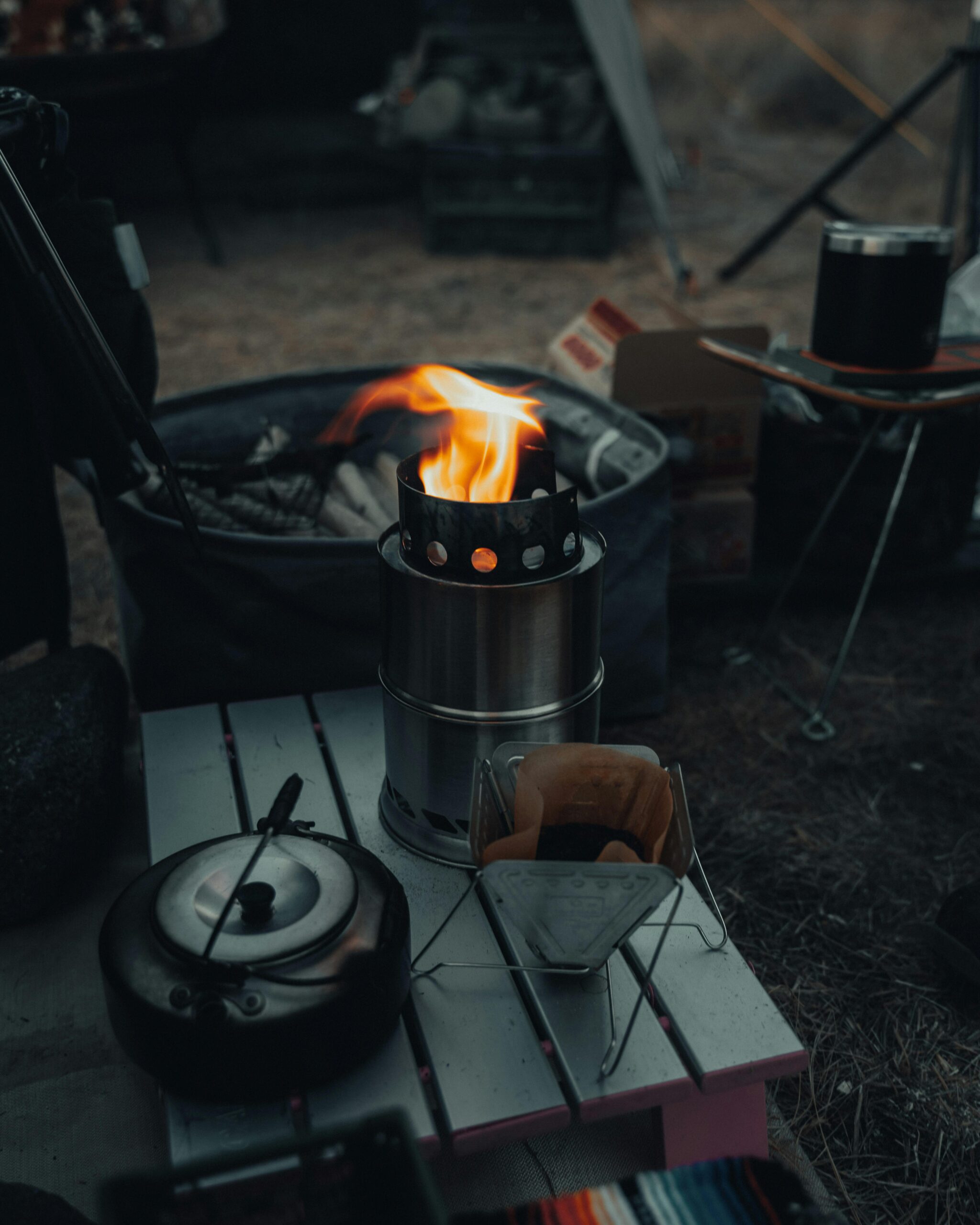
We used a 2-in-1 pit on a lakeside trip, cooking foil dinners then turning it into our evening fire. It worked well for that scenario — just not ideal for high-smoke areas.
Side-by-Side Comparison & Recommendation
If I were to pick one all-around ideal portable fire pit for a Canadian adventurer, my pick would likely be the Outland Living Portable Propane Fire Pit, especially for mixed backyard + camping use, because it works during many fire bans and provides clean flame. But if your priority is wood fire ambiance and smokeless performance, Solo Stove Bonfire 2.0 is a very strong option.
If you want a more compact backup, the Solo Stove Mesa XL or Odoland 2-in-1 are great secondary choices.
Real-Life Tips & Lessons from Our Fire Pit Adventures
- Always bring spare fuel — whether extra propane tanks or dry wood/charcoal. On one trip we nearly ran out of propane mid-evening, and had to switch to another camp’s fire.
- Check fire bans early — many parks prohibit open wood fires. A propane or CSA/ULC-certified pit often remains legal.
- Clean your ash regularly — ash buildup chokes airflow, reducing burn efficiency (especially for smokeless designs).
- Mind your surroundings — place on non-flammable surface (gravel pad, rock, etc.). Avoid overhanging branches.
- Let the pit cool fully before packing — especially metal designs; hot metal bending or warping is a risk.
- Use a fire pit cover or carry bag — to protect from corrosion or damage.
- Test in daylight first — I once assembled a new pit in the dark; misaligned parts meant I couldn’t light it without redoing setup.
One memorable night: my wife and I paddled out to a quiet lakeside spot, set up our portable pit (Outland), brewed tea, and sat under stars. The wind was tricky, but the flame stayed steady. She remarked how amazing it was to have a “real fire” without hauling logs in the canoe. That moment convinced me — a good portable fire pit is one of the best outdoor investments.
Final Thoughts & Buyer Advice
- If you want ease, legality in fire bans, minimal smoke, go propane or gas-based options like Outland.
- If you want real wood fire smell and ambiance but still want cleaner burning, smokeless designs (Solo Stove, Outsunny) are excellent.
- Always factor transport weight and fuel logistics when choosing.
- Read Canadian user reviews on Amazon.ca (photos especially) — they show how a model handles Canadian seasons.
- And finally: no fire is perfect — there’s always a trade-off between portability, heat, burn quality, and smoke.